3.
Kata Creates
Culture
5.
The TK
Starter Kata


Value Stream Mapping
Supporting Materials

Extras

1.
Improvement Kata

Challenge

2.
Coaching
Kata


4.
Getting
Started

TOYOTA
KATA

The
Improvement
Kata Exercise


Practicing Kata
Modifies Culture

1-minute video: Learning new skills

How do you develop a team or organization
culture of improvement, adaptiveness, and
innovation? How do you scale up? By
adding practice of Starter Kata to normal
daily work, with managers as coaches!
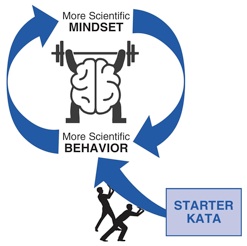
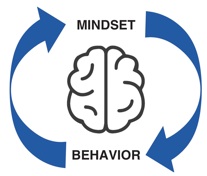
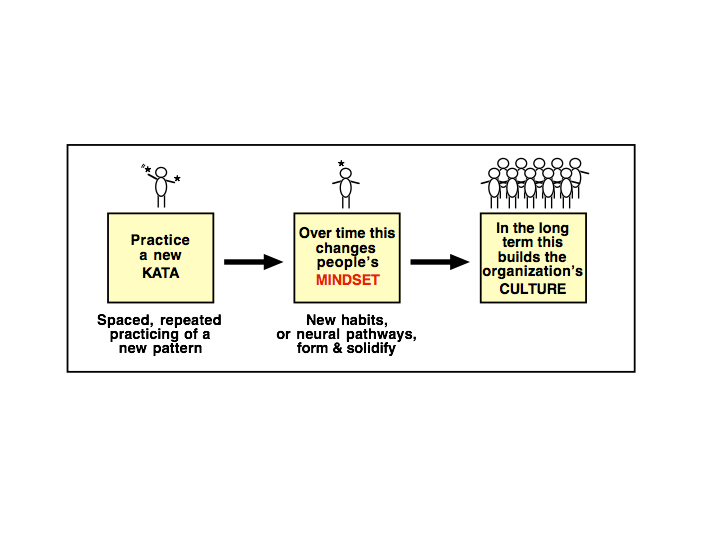
Brain research is clear: Developing new ways of thinking means practicing
targeted behaviors daily. The implication is that practice and coaching should
be integrated into the normal daily operation of a team or organization. The
Improvement Kata and Coaching Kata are exactly that – an ongoing, sustained
process to develop useful scientific skills and mindset, through the work itself.
Something you should know about the brain
Brain scientists like to say, “Anytime you do something you’re
more likely to do it again.” In other words, thoughts and
behaviors that we repeat, intentionally or unintentionally,
can get woven into the neural structures of our brain.
Whatever we focus on and repeatedly do with enthusiasm
tends to become a reflexive way of thinking and acting
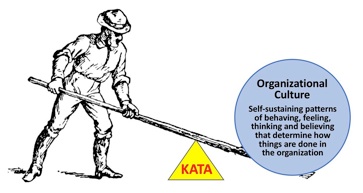
– our mindset and habits. In this way your current team or
organizational culture reinforces and perpetuates itself daily.
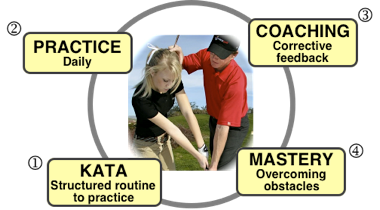
This is where practicing Starter Kata comes in. As we know
from sports & music, with the following ingredients we can
break the cycle and develop new skills and habits to replace
some old ones: (1) structured routines for beginners to
practice, (2) frequent repetition, (3) feedback from a coach to
correct our practice, and (4) optimism and enthusiasm from
feeling that we’re overcoming obstacles and making progress.
The role of managers in this: Managing through coaching
Managers are teachers by default, and the primary actors on the ground who create
and perpetuate an organization’s culture. They create the creators. If you’re a
manager, supervisor or team leader you’re teaching your people a way of thinking,
whether you realize it or not.
Toyota Kata shows managers how to teach their people a scientific way of thinking,
through deliberate practice in the course of everyday work. This empowers people
to be knowledge workers – enabling teams to develop solutions in an iterative,
scientific way, quickly and closer to the action. This, in turn, enables an organization
to better navigate through complex and dynamic terrain, again and again.
The more you and your team develop skill
and confidence in a scientific-thinking pattern:
▪ The more you can empower people
▪ The bigger the challenges you can take on
▪ The more knowledge you can build
▪ The faster your organization can move ahead