
Welcome to the University of Michigan’s Cognitive Neuroimaging Lab.
Working memory is an integral part of our everyday lives, so much so that most of the time we are not even aware it is at work. Our aim in the Jonides Lab is to better understand the mechanisms and underlying processes that contribute to working memory and to executive processes that operate on the contents of working memory. The majority of our work is concerned with the storage of information in working memory, as well as with executive functions of working memory. Our tasks are intended to study the processes by which participants allocate attention selectively to information in their environment as well as those used to switch attention from one piece of information to another, or inhibit attention to irrelevant information. Also, our lab is interested in individual differences in working memory and how these predict cognitive performance, especially concentrating in how training working memory and executive processing may change performance in cognitive tasks. Past studies have investigated how transcranial direct current stimulation (tDCS) can modify the effects of cognitive training, both for working memory and for other cognitive functions.
Our understanding of working memory and executive processes has substantial impact on understanding a variety of human states. For example, we have been studying changes in executive processing that accompany a variety of pathologies including ADHD, inability to delay gratification, and general susceptibility to distraction. Our work will continue to have translational impact on these and other human conditions that involve changes in cognitive control and working memory.
The Cognitive Neuroimaging Lab directed by John Jonides believes that Diversity, Equity, and Inclusion are the cornerstones of academic excellence. Our lab fully supports and endorses the University of Michigan’s DEI Statement (https://diversity.umich.edu/about/defining-dei/). Therefore we celebrate diversity through, but not limited to: race and ethnicity; gender and gender identity; sexual orientation; socioeconomic status; language; culture; nationality and origin; religious commitments; age; (dis)ability status; geographic location; and political perspective. Historically, the cognitive sciences have been biased towards majority populations. Therefore, our lab is dedicated to supporting, advocating for, and learning from underrepresented populations by including graduate students, post docs, undergraduate students, research assistants and research participants from diverse backgrounds to encourage the collaboration of a multitude of perspectives. We promote equal opportunities for all and are committed to ensuring that differences are not only welcomed, but encouraged to foster an enhanced learning environment. Alongside our goal of establishing equity of representation, we pursue unique research projects that promote social good. Examples are studies of aging populations, those with Major Depressive Disorder, Schizophrenia, and individuals with ADHD. Come learn with us, and let us learn from you!
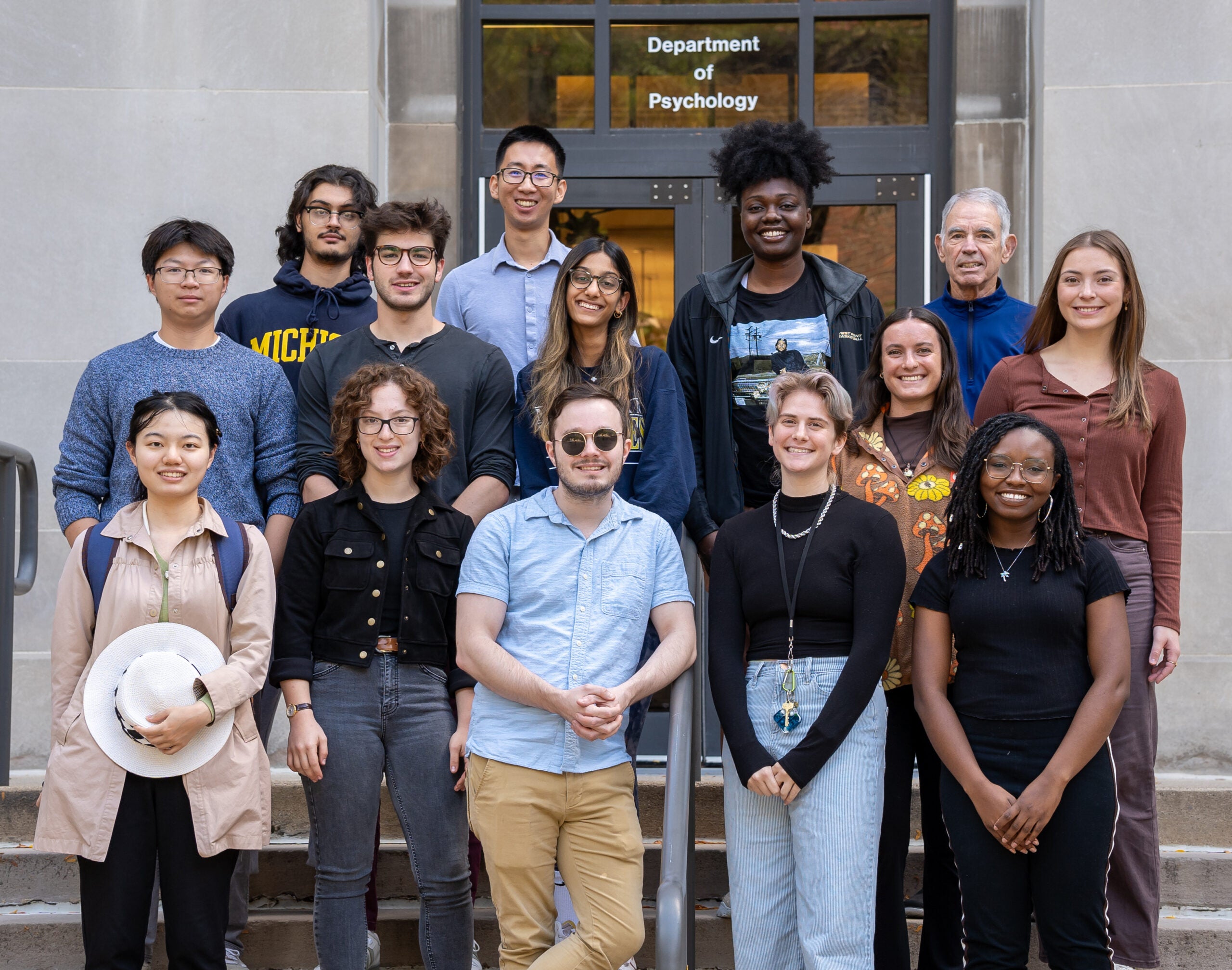
Ibrahim Hallouche (research assistant), Han Zhang (Post-Doc), Jahla Osborne (Ph.D. candidate), John Jonides (PI)
Wei Zhou (RA), Jackson Leb (RA), Esha Brar (RA), Maddie Quirk (Ph.D. candidate), Sydney Rosbury (RA)
Su Wang (Ph.D. Candidate), Bailey Redler (RA), Kane York (Ph.D. candidate), Sarah Liberatore (lab manager), Adria Shines (RA)
Not pictured: Ava Kucera, Milind Pulugura, Noah Scroppo, Sarah Jabre, Zara Manna