Arts and Ideas in the Humanities

A Concentration Program at the Residential College

Concentration Requirements

Requirements for the concentration are grouped into three categories:
• History and Theory
• Visual Studies, Performance and Studio Arts
• Specialized Study.


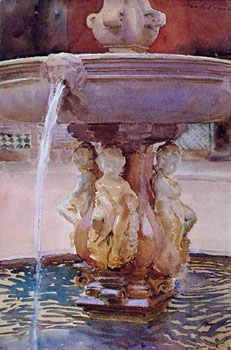
John Singer Sargent
Spanish Fountain, after 1902
Metropolitain Museum of Art,
New York City 

I. History and Theory:

Students work in two areas: (A) Historical Perspectives and (B) Issues of Modernity. They must take 2 courses in one area and 1 in the remaining area:

A. Historical Perspectives

  • HUMS 265 Arts and Letters of China
  • HUMS 309 Classical Sources of Modern Culture: The Heritage of Greece
  • HUMS 315 Representations of History in the Literature and Visual Arts of Rome
  • HUMS 310 Medieval Sources of Modern Culture
  • HUMS 314 The Figure of Rome in Shakespeare and 16th Century Painting
  • HUMS 344 Reason and Passion in 18th Century Europe
  • HUMS 373 The Performing Arts in South and Southeast Asia

B. Issues of Modernity

  • HUMS 291 Arts and Ideas of the 19th Century
  • HUMS 290 Arts and Ideas of the 20th Century
  • HUMS 305 Cultural Confrontations in the Arts
  • HUMS 308 Arts and Ideas of Modern South and Southeast Asia
  • HUMS 318 Critical Approaches to Literature
  • HUMS 342 Representations of the Holocaust in Literature, the Visual Arts and Film
  • HUMS 372 The Subject in the Aftermath of Revolution

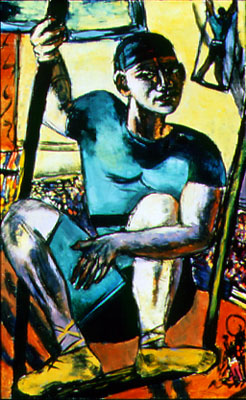
Max Beckmann
Acrobat on the Trapeze, 1940
The Saint Louis Art Museum


II. Visual Studies, Performance, and Studio Arts:

Students select a total of 2 courses:

A. Film/Video

  • HUMS 236 Art of the Film
    HUMS 255 Film Experience
  • HUMS 312 Central European Cinema
    HUMS 313 Russian Cinema
    HUMS 357 What Television Means: Research, Analysis and Interpretation

B. Dance

  • HUMS 235 Topics in World Dance
  • HUMS 260 The Art of Dance: An Introduction to American and European Dance History
  • HUMS 444: From the Mariinsky to Manhattan: George Balanchine and the Transformation of American Dance

C. Studio Arts[to the RC Studio Arts Program]

  • ARTS 268 Introduction to Visual Thinking and Creativity
  • ARTS 269 Elements of Design
  • ARTS 285 Photography
  • ARTS 287 Printmaking
  • ARTS 288 Introduction to Drawing
  • ARTS 289 Ceramics

D. Music [to the RC Music Program]

  • HUMS 250 Chamber Music
  • HUMS 252 Topics in Musical Expresion: Improvisation
  • HUMS 252 Topics in Musical Expression: Afro-Cuban Drumming Styles
  • HUMS 253 RC Singers
  • HUMS 256 Studying and Playing Southeast Asian Music
  • HUMS 350 Creative Musicianship
  • HUMS 351 Creative Musicianship: Theory Lab


III. Specialized Study

Arts and Ideas concentrators are expected to elect seven courses divided (4+3) among two upper-level specializations. This requirement provides the opportunity of pursuing sustained study in relevant disciplinary or interdisciplinary areas as well as, possibly, in the advanced practice of a particular art form. Thus, the specializations may be in critical, historical, or theoretical courses of study offered by other departments and programs, whether in the Residential College or in the LS&A (for example, in a particular literature, art history, history, anthropology, psychology, philosophy, religion, women’s studies, African and African-American studies) or in the practice of a specific art form (including studio arts such as painting, sculpture, photography, drawing, printmaking or design, as well as other arts such as creative writing, theater, music, dance or video and film making). However, no more than one of the two specializations may be in the practice of an art form.

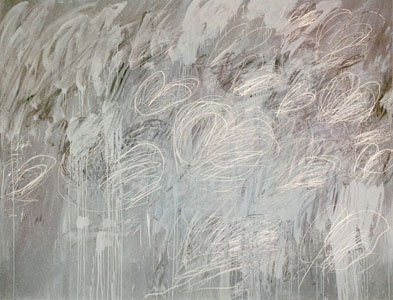
Cy Twombly
Untitled 1968
Museum of Art,
Rhode Island School of Design