
LaripS.com, © Bradley Lehman, 2005-22, all rights reserved.All musical/historical analysis here on the LaripS.com web site is the personal opinion of the author,
as a researcher of historical temperaments and a performer of Bach's music.
Recorded samples
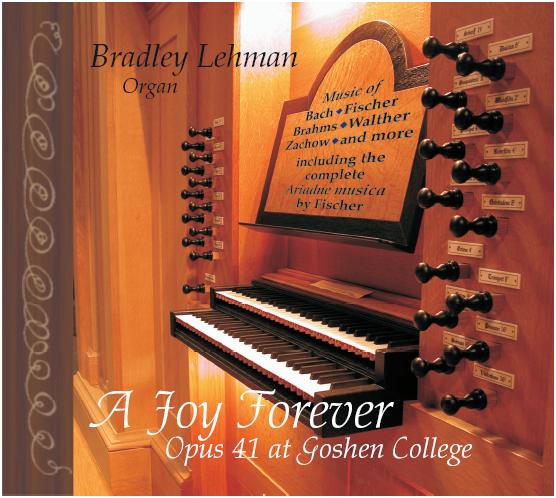
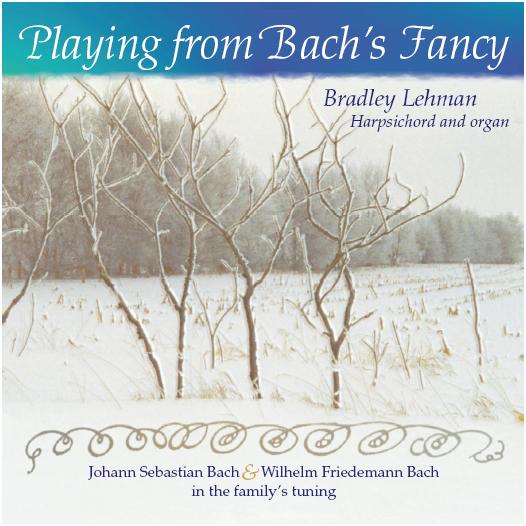 LaripS 1002 and 1003 were released January 4th 2006.
Both are in the Bach temperament, recorded at Goshen College (Indiana, USA).
#1002 is a set of three solo organ recitals, on three CDs.
#1003 has one hour of music on harpsichord, plus a 20-minute section of bonus tracks on organ.
LaripS 1002 and 1003 were released January 4th 2006.
Both are in the Bach temperament, recorded at Goshen College (Indiana, USA).
#1002 is a set of three solo organ recitals, on three CDs.
#1003 has one hour of music on harpsichord, plus a 20-minute section of bonus tracks on organ.
 LaripS 1001 "In Thee is Gladness" was released in January 2005. It is a
program of music for organ and trumpet, performed in equal temperament on two organs in north Germany.
LaripS 1001 "In Thee is Gladness" was released in January 2005. It is a
program of music for organ and trumpet, performed in equal temperament on two organs in north Germany.
The following samples are all performed by
Bradley Lehman.
© 2005-22, all rights reserved!
- Prelude in C major from Bach's "Well-Tempered Clavier" book 1, played on harpsichord.
[Cleaner studio recording on LaripS 1003]
(No sharps or flats in the key signature, but each available "black" note appears as the music progresses,
against the background of all the "white" notes.)
- Fugue in F# minor from Bach's "Well-Tempered Clavier" book 1, played on harpsichord.
[LaripS 1003] (Three sharps in the signature, and many other sharps along the way.
See also Laurence Dreyfus's analysis in
Bach and the Patterns of Invention, 1996, pp 155-9.)
- Sinfonia in G minor by Bach, played on harpsichord. [LaripS 1003]
(Also known as a "three-part invention"....)
- Fantasia in E-flat major (excerpt) by Pachelbel, played on organ.
A toccata-like piece that wanders into
uncommonly deep flats of Ab/Db/Gb/Cb in this section near the end. [See especially
Peter Williams's mention of this piece in discussion of Bach's BWV 622, in The Organ Music of J S Bach 2nd edition, 2003.]
- JKF Fischer's Preludes and fugues in E major, F minor, F major, F# minor, G minor, and Bb major from Ariadne musica, played on organ. [LaripS 1002]
- Bach's O Mensch, bewein dein Sünde groß BWV 622, played on organ. [LaripS 1002] (Three flats, and a famous spot going to C-flat major near the end.)
- Brahms's O Welt, ich muss dich lassen Op posth 122 #3, composed c1896 near the
end of Brahms's life. Played on organ.
- A lullaby in B major
(five sharps), and then transposed to B-flat major (two flats) [informal videocam recordings to MP3]
[The printed music]
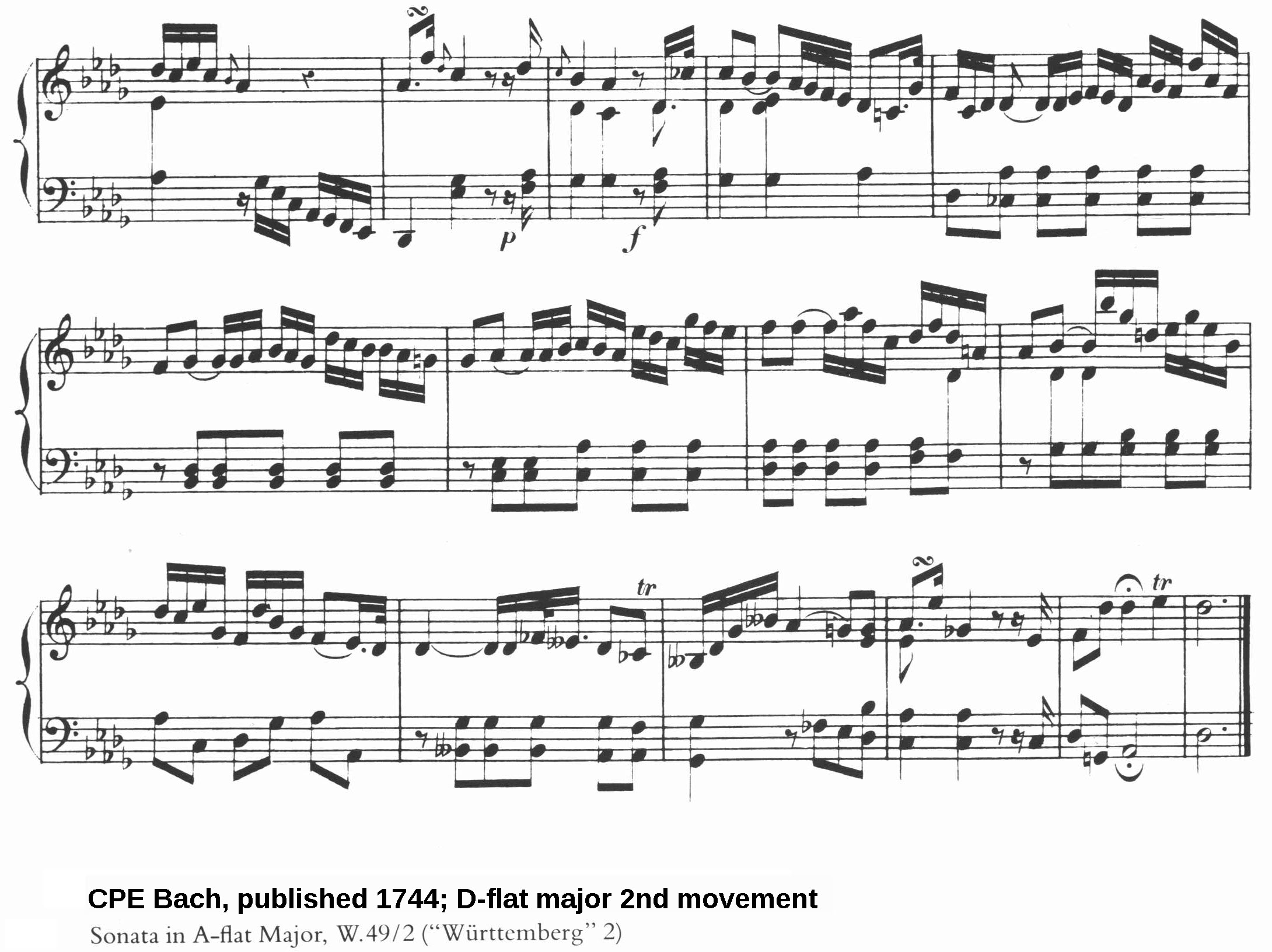
- CPE Bach, Württemberg Sonata #2 in A-flat, 1st-2nd movements, 1742 - performed on a Yamaha piano, from a church service in October 2009. The video's captions
describe the 17 notes required by the composition, and point out some of the musical features along the way. This is
a piece that according to Di Veroli's 2009 book "made no musical sense" in any other known temperament but equal!
- CPE Bach, D-flat major going to G-flat minor(!) (excerpt from the Württemberg Sonata #2 in A-flat, 2nd movement, 1742) - from a 2005 harpsichord recital by Bradley Lehman
at Bluffton University. Same composition as above, but on harpsichord.
- Informal video (on YouTube)
of WTC book 1 Prelude in C, from January 2005
- Informal video (on YouTube)
of a Buxtehude Sarabande, played first in A major and then in A-flat major
- See also the videos page and the audio streaming page!
A direct comparison of equal temperament and the Bach temperament is available as a set of two
video demonstrations on YouTube.
The Taylor & Boody Opus 41 organ (played in LaripS 1002) is part of the
Goshen College Music Center, Goshen Indiana.
Some of my musical priorities and principles are described at my older essays
"Decoro, sprezzatura, grazia"
and
"What does a musical performer think about?".
Six other samples drawn from LaripS 1002 and
1003 are hosted at Oxford University Press's web site,
as listening examples for the article "Bach's extraordinary temperament: our Rosetta Stone". See the
outline page for details and that link.
See also:
Return...

|
|
v Introduction
v Articles
v FAQ
> Practice
* Hear samples
- Tune it:Begin
- Tune it:Interm
- Tune it:Expert
- Vocal music
- Test pieces
- Affekt tests
- Organ 41
- Adventures
v Theory
v History
v Etc
v Recordings
|